
While the global charity sector is built on amazing intentions, the way money actually gets distributed often ends up holding back the very people it’s meant to help. Between rigid project grants that ignore the realities of running an organisation day-to-day, and old-school structures that keep funding locked up in the Global North, the current system is getting in the way of real progress. If we want to build a fairer, more sustainable future for international development, we need a fresh approach. Real, lasting impact comes down to two game-changing shifts: embracing unrestricted funding and trusting local partners with direct grants.
Unrestricted funding
Whilst obviously grateful for project funding, the management of that grant, and the specific reporting requirements, takes up staff time and resources. Many funders aren’t keen on contributing towards overheads and yet organisations are, rightly so, expected to uphold the highest levels of due diligence and professionalism. But how is that funded if overheads are not covered by the grant?
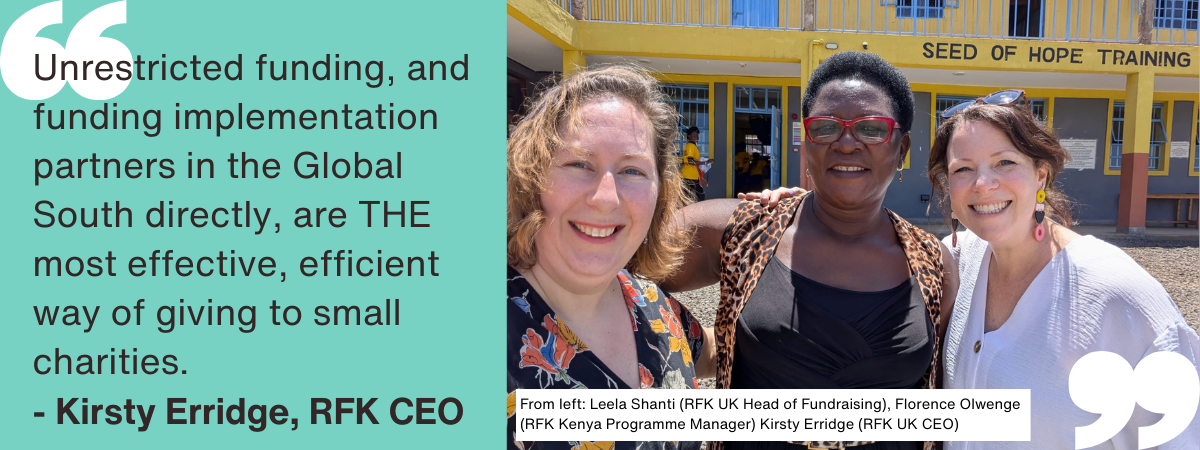
Unrestricted grants enable organisations to invest in the areas, or projects, where it is needed most and will have the greatest impact, or potential growth for the organisation. It also gives the organisation the ability to be flexible and respond quickly to changing needs. This is imperative when working with communities who are experiencing poverty and are extremely vulnerable to any changes, such as the impact of climate change e.g. floods or drought, or the political world e.g. vital health services being cut suddenly, as happened with USAID.
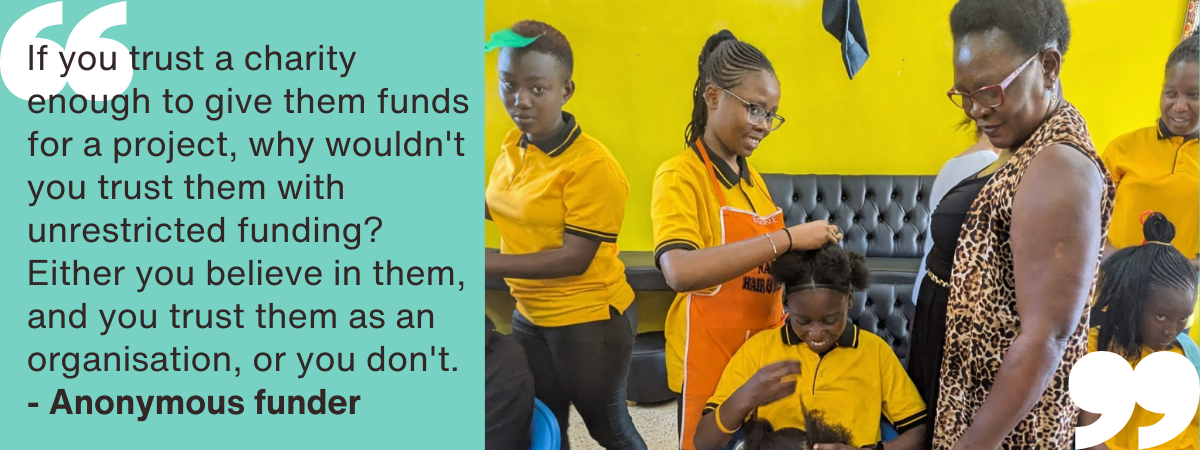
As one funder said to their grantee when giving them an unrestricted grant:
Direct Funding
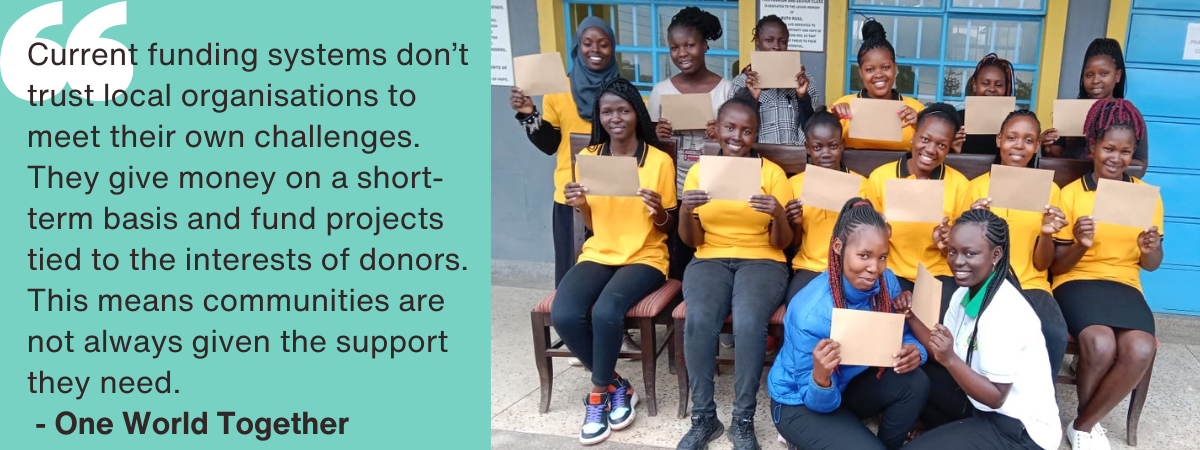
In most cases, UK-registered charities that fund work in the Global South are the ‘middle-men’ between funders and the teams who deliver (and, if their work is community-led, design) the work.
With the vast majority of Trusts, Foundations and other formal funding bodies being based in the Global North, at present, most will only consider funding charities that are also registered in the UK, or equivalent Global North country.
This needs to change.
We work in close partnership with a Kenyan-led NGO whose team are from the communities where the programmes are based. We believe that to create truly meaningful and sustainable change, any work happening in the Global South must be designed and delivered by local experts, who understand the nuanced issues, and solutions which are feasible, not the best intentions of teams in the Global North.
We must advocate for funders (both institutional and individual) to build relationships with local partners, and fund them directly. It is shifting power in action.
At Raising Futures Kenya, our Strategic Plan states: “Our ultimate long term goal is for there to be no need for a UK Raising Futures Kenya. We want RFK in Kenya to be fully autonomous and donors and funders happy to fund them directly.”
We were absolutely delighted when an anonymous grantmaker, who awarded us a significant grant, agreed to fund our Kenyan partner NGO directly. When asked why they funded us, they said:
“We think that grants are more likely to succeed when they are held and implemented by those who are closest to the work. Granting directly to the local agency removes a layer of administrative cost and promotes trust-based philanthropy.”
To read more about our commitment to advocating for change in the sector, take a look at our latest Strategic Plan: https://www.raisingfutureskenya.org.uk/whatwedo/strategic-plan/
Recent Comments